
“Finally, be strong in the Lord and in the strength of his might.” – Ephesians 6:10
We come now to what appears, at first glance, to be the closing stretch of Paul’s majestic letter to the Ephesians. After two years spent in our study of this epistle, we have dug into the divine riches of doctrine in chapters 1–3 and the practical duties of the Christian walk in chapters 4–6:9. We have marveled at God’s sovereign grace, our adoption through Christ, the mystery of redemption revealed, and the call to walk in love, wisdom, submission, and unity. Every verse has brought us closer to the heart of God, refining us in our understanding of the gospel and our role as saints in the body of Christ. And now, as the letter nears its close, we are confronted with an unexpected, almost jarring shift in tone, a trumpet blast rather than a gentle closing benediction.
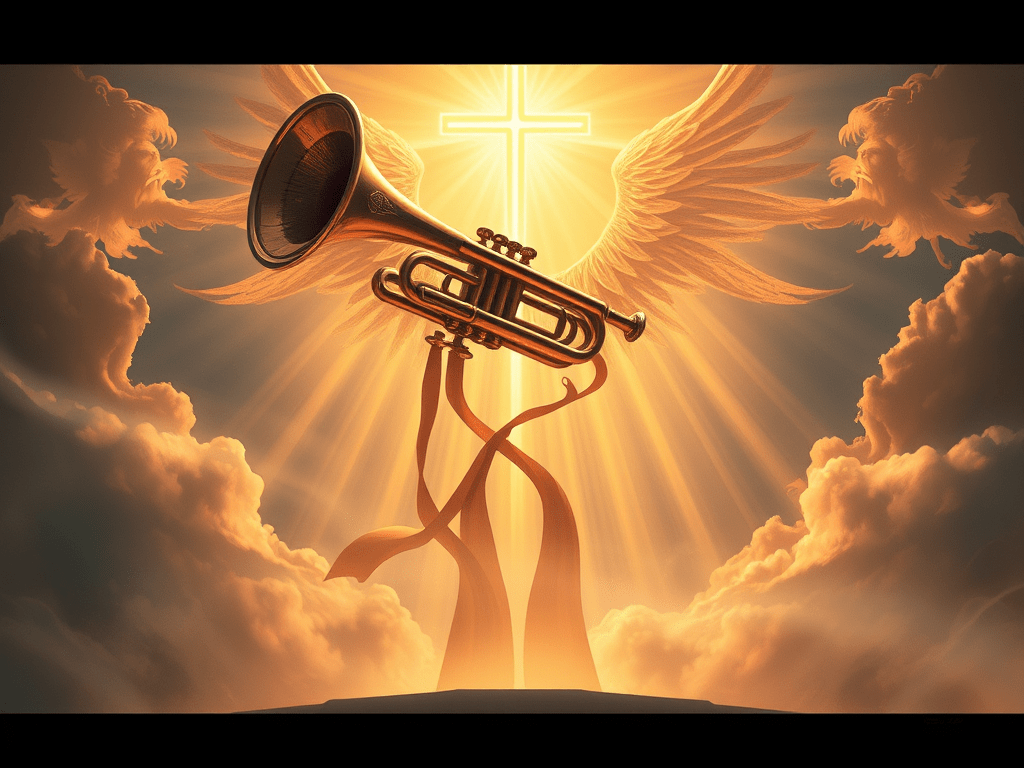
“Finally,” Paul says. Finally, after all has been said about who we are in Christ, about how we are to live, there remains this final, essential word. It is not an afterthought. It is a culmination. Not a mere conclusion, but a battle cry. The Greek word here—λοιπόν (loipon)—can be rendered as “from now on” or “for the rest.” It suggests not a soft landing but a transition into a new terrain. We are not winding down. We are being called up. This “finally” is the sound of a spiritual bugle rallying the church to arms. It is Paul placing his hand upon our shoulders and telling us to rise, not to run, not to attack, but to stand. And in order to stand, we must be strengthened, not in self, not in circumstance, but in the Lord.
If we do not linger here, if we do not pause long enough to feel the weight of this verse, we will enter into spiritual warfare ill-prepared, ill-equipped, and ultimately vulnerable. Before Paul speaks of armor, before he names the schemes of the devil or the flaming darts of the evil one, he insists upon this foundation: Be strong in the Lord and in the strength of His might. That is where spiritual warfare begins. Not with strategies or resolve, but with strength, and it is critical for us to understand that this strength is not our own.
This opening line in Ephesians 6:10 is not a new idea in Paul’s thought; it is the logical conclusion of all that has come before. To grasp its weight, we must see it in light of the entire structure of the letter. Ephesians is not a scattered series of teachings, it is a symphony, arranged with purpose and beauty. The first three chapters give us doctrine, what God has done for us in Christ. Chapters four through the beginning of six exhort us in our duty, how we are to live in light of this grace. But now, Paul closes with a charge to stand firm in warfare, a call to spiritual maturity. In the words of Watchman Nee, this is the final posture of the believer: Sit, Walk, Stand. First we sit with Christ in the heavenly places, resting in His finished work. Then we rise to walk in obedience and love. But now we are commanded to stand in battle, not advance, not conquer, but stand. And to stand firm, to stand as to endure. It is to be unmovable when everything shakes. It is the mark of one who has grown strong in the grace of God.
But let us be clear: the strength Paul commands is not our natural disposition or personal resolve. The Greek verb for “be strong” is endynamoo (ἐνδυναμόω), a passive imperative. It means, quite literally, “to be empowered” or “to receive strength.” This is not a strength we summon deep within us as the world would encourage, instead it is one we receive. It is not pulled from within; it is given from above. The command itself implies our weakness. We cannot make ourselves strong. We must be made strong by another. We must be strengthened by grace, as Paul writes elsewhere: “You then, my child, be strengthened by the grace that is in Christ Jesus” (2 Tim. 2:1).
And what kind of strength is this? Paul is careful to define it. Not just “be strong,” but “in the Lord and in the strength of His might.” The terms Paul uses here are familiar ones, kratos and ischus, words previously used to describe the mighty power of God that raised Christ from the dead and seated Him above all rule and authority (Eph. 1:19–21). This is resurrection strength. Ascension power. The very force by which Christ was exalted and enthroned. And now Paul tells us that this is the strength available to the believer, to be drawn upon not as a theological concept but as a lived reality.
What separates the mature Christian from the immature one is not the absence of struggle but the source of their strength. Every believer wrestles. Every saint walks through trial, temptation, weakness, and weariness. But only those who know how to be strong in the Lord endure with joy, fight without fear, and stand when others fall. They have learned to draw not from themselves but from Christ. Their prayers are not perfunctory. Their worship is not entertainment. Their theology is not a hobby. They live on strength that is not their own. That is what sets them apart. And that is what Paul now calls us to.
This section of Ephesians is not an aside. It is not something for pastors and missionaries only. It is the final word for every Christian who desires to walk worthy of the calling to which they have been called. Paul assumes opposition. He assumes resistance both internal and external. He assumes warfare. And so must we. The spiritual life is not a retreat center but a battlefield. It is not ease, but endurance. Not passivity, but perseverance.
It is no coincidence that Paul calls us to be strong before he speaks of armor. Without the strength of the Lord, the armor will be ornamental at best. Truth will seem irrelevant. Righteousness will feel optional. Faith will falter. The Word of God will sit on the shelf, untouched. Prayer will be neglected. But when we are strong in the Lord, when we are daily, hourly drawing from the indwelling power of Christ, every piece of armor becomes essential, effective, and enduring.
So before we reach for the armor, we must reach for the strength. We must pray and wait to be clothed with power from on high. We must sit again with Christ and remember who we are in Him. We must walk again in obedience, knowing that we are upheld by grace. And we must learn to stand, rooted not in our grit, but in His power.
The strength to stand comes not from the warrior’s skill but from the Captain’s might. It is not ours to manufacture. It is His to give. But it is ours to seek. And seek it we must.
So let us not hurry past this first verse. Let us linger in it, pray through it, and ask the Lord to make it real in our inner being. Let us prepare our hearts for what is to come, not with bravado, but with dependence. We are entering holy ground, the realm of battle. And we must be strong. But take heart, dear sisters: we do not stand alone.
Discover more from Shorelight Devotionals
Subscribe to get the latest posts sent to your email.
 Shorelight Devotionals
This one is excellent!Thank you, Pastor Bobby
LikeLike